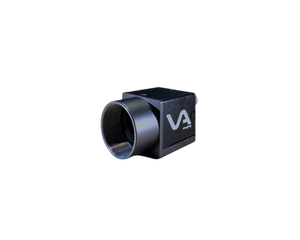
VA Imaging VEN-230-168U3M-FPC 1/1.2" Monochrome CMOS (Sony IMX174) Boardlevel Camera, 2.3 Megapixels, 1920 x 1200, 168 fps, Global Shutter, C-Mount, FPC Connector, USB 3.0 Output
USB3 Vision OEM Camera IMX174
The Venus USB3.0 FPC camera lineup represents an industrial boardlevel camera featuring a USB3.0 connection. It incorporates a unique FPC connector that minimizes the footprint compared to a conventional USB3.0 port. This design results in a more compact camera, facilitating easier device integration. Included is a small PCB adapter that converts the FPC connector to a USB3 Micro B port, allowing straightforward camera testing. This adapter can be detached to conserve space. USB3.0 serves as an ideal interface for cameras requiring high resolution and rapid frame rates. Additionally, it is well suited for embedded systems such as Raspberry Pi (version 4 or newer) and NVIDIA platforms.
This version is particularly suitable if your application meets the following criteria:
- A highly compact camera (29x29x25.1mm) with a minimal connection interface is needed
- Options for 100, 200, or 500mm FPC cables
- Single-cable connectivity for the device
- Compatibility with PCs and embedded systems including ARM V7 & ARM V8 architectures
- Support for hardware triggering
Warranty & Product Life Cycle
Daheng Imaging manufactures over 100,000 industrial cameras annually, adhering to stringent quality standards. These industrial cameras hold TÜV Rheinland certification and come with a three-year warranty. Each camera model remains available for a minimum of seven years following its market release, with many models offering an even longer product lifespan. For additional details on our product life cycle management, please refer to this article.
Monochrome Camera
A monochrome, or black and white, camera provides benefits across numerous applications. While color cameras dominate sectors like security and telecommunications, industrial uses often prefer monochrome cameras for their advantages. These cameras exhibit high sensitivity to light, deliver crisp imagery, and reduce data volume compared to color cameras. This makes them especially effective for image processing tasks. By choosing the appropriate lighting wavelength and lens filters, specific product features can be emphasized, enabling the generation of high-contrast, high-resolution images with monochrome cameras.