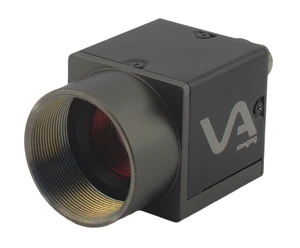
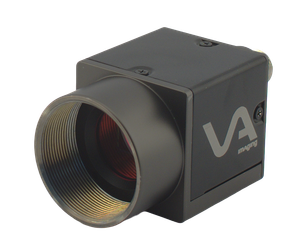
VA Imaging MER2-060-642U3M-VA Customized Sensor CMOS Camera, 1 Megapixels, 1024 x 600, 642 fps, Global Shutter, C-Mount, USB 3.0 Output

SKU:
VAI MER2-060-642U3M-VA
Availability:
Typically 5-7 days
$299.00
Current Stock:
Adding to cart… The item has been added

Customized Sensor Industrial USB 3.0 Vision Camera

The Mercury 2 USB 3.0 camera is designed as an industrial vision camera equipped with a USB 3.0 interface. USB 3.0 provides an ideal connection for cameras requiring high resolution and rapid data transfer rates. This interface is well-suited for embedded systems such as Raspberry Pi (version 4 or newer), NVIDIA platforms, and conventional PC setups.
This industrial vision camera model is a suitable choice if your application meets the following criteria:
- Industrial-grade camera
- Cable length up to 4.5 meters (extendable to 10 meters with optical USB3 cable)
- Single cable connection for device interface
- Compact size (29x29x29mm)
- Compatible with x86 computers and embedded ARM V7 & ARM V8 platforms
- Supports hardware triggering (requires I/O cable)

For comprehensive information on our industrial USB 3.0 vision cameras, please refer to our manual.

MTBF, Warranty & Product Longevity

Daheng Imaging manufactures over 100,000 industrial cameras annually, adhering to stringent quality standards. The mean time between failure (MTBF) exceeds 400,000 hours (equivalent to 45 years of continuous operation). These industrial cameras hold TÜV Rheinland certification and come with a 3-year warranty. Each camera model remains available for a minimum of 7 years post-launch, with many models enjoying even longer lifespans. For additional details on our product life cycle management, please consult this article.

Monochrome Industrial Camera

A monochrome camera, also referred to as a black and white camera, provides distinct benefits across numerous applications. Although color cameras dominate the security market, industrial sectors favor monochrome cameras for their enhanced light sensitivity, sharper image quality, and reduced data size compared to color cameras. These qualities make monochrome cameras particularly advantageous for image processing tasks. By carefully choosing the appropriate lighting wavelength and lens filters, product features can be emphasized, enabling the capture of high-contrast, high-resolution images using monochrome cameras.