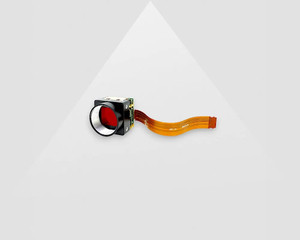
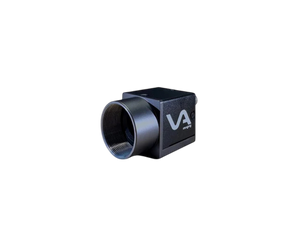
VA Imaging VEN-1220-32U3C-FPC 1/1.7" Color CMOS (Sony IMX226) Board-Level Camera, 12.2 Megapixels, 4024 x 3036, 32 fps, Rolling Shutter, Board Level (FPC), USB 3.0 Output
USB3 Vision OEM Camera IMX226
The Venus USB3.0 FPC camera lineup features an industrial boardlevel camera equipped with a USB3.0 interface. It utilizes a unique FPC connector that minimizes the footprint compared to a conventional USB3.0 connector. This design makes the camera more compact and simplifies integration into various devices. Included is a small PCB adapter that converts the FPC connector to a USB3 Micro B connector, facilitating easy testing of the camera. This adapter board can be detached to conserve space. USB3.0 serves as an ideal interface for high-resolution, high-speed imaging. Additionally, it is well-suited for embedded systems such as Raspberry Pi (version 4 or later) and NVIDIA platforms.
This camera model is particularly suitable if your application meets the following criteria:
- Requires a highly compact camera (29x29x33.3mm) featuring an ultra-compact connection interface
- Offers FPC cable lengths of 100, 200, or 500mm
- Operates with a single cable connection
- Compatible with PCs and embedded systems using ARM V7 & ARM V8 architectures
- Supports hardware triggering
Warranty & Product Life Cycle
Daheng Imaging manufactures over 100,000 industrial cameras annually, adhering to stringent quality standards. These industrial cameras are TÜV Rheinland certified and come with a 3-year warranty. Each camera model remains available for a minimum of 7 years following its market release, with many models supported for significantly longer periods. For detailed information on our product life cycle management, please refer to this article.
Industrial Color Camera
A color camera employs a Bayer filter pattern to generate color images. The RGB values for each pixel are computed by combining the pixel s own value with those of adjacent pixels. This process results in images that are generally less sharp than those captured by monochrome cameras. Because of the RGB filter overlay, each pixel receives up to 66% fewer photons under white light compared to a monochrome sensor, making color cameras inherently less sensitive to light. To address this limitation, the following adjustments can be made:
- Increase illumination intensity
- Raise the gain setting
- Extend shutter speed or exposure duration
- Choose a sensor with higher light sensitivity
- Select a lens optimized for greater light transmission
Compared to typical security cameras and webcams, industrial color cameras feature larger, more light-sensitive pixels, delivering superior image quality.